Claim Your Free Estimate Today
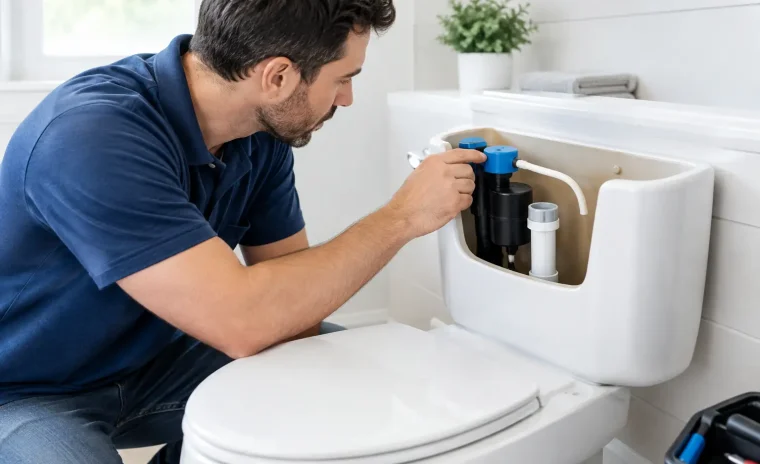
That quiet refill sound after everyone has gone to bed is more than an annoyance. A toilet that keeps running can waste hundreds of gallons of water, raise your utility bill, and point to worn parts inside the tank. If you need to know how to fix a running toilet, start with a simple diagnosis instead of replacing parts at random.
Most running toilets have a repairable issue in the tank. The flapper may not seal, the chain may be too tight, or the fill valve may be allowing water to rise into the overflow tube. In Southern Arizona, mineral-heavy water can also shorten the life of these components. The good news is that you can often identify the cause in a few minutes.
Start by confirming where the water is going
Remove the toilet tank lid carefully and set it on a folded towel. Porcelain lids can crack easily. Flush the toilet, then watch what happens as the tank refills.
If water continues to run into the overflow tube – the open vertical tube near the center of the tank – the issue is usually the fill valve or float adjustment. If the tank fills, stops, and then periodically turns back on, water is likely leaking slowly from the tank into the bowl. That usually points to the flapper or flush valve seat.
Before making adjustments, look for water on the floor around the toilet base. A running toilet is normally an internal tank problem, but water at the base can indicate a failed wax seal, loose supply connection, or crack. That calls for a different repair and should not be ignored.
How to fix a running toilet step by step
Turn off the shutoff valve behind or beside the toilet before removing or replacing any parts. Turn it clockwise until it stops, then flush once to empty most of the tank. Keep a towel and small container nearby for the remaining water.
The parts inside toilet tanks vary by model, but the diagnostic order stays the same: check the flapper and chain first, then the water level, fill valve, and overflow tube.
Test the flapper for a slow leak
The flapper is the rubber or silicone seal at the bottom of the tank. When you flush, it lifts to send water into the bowl. When it drops back into place, it should create a watertight seal.
A quick dye test can confirm a flapper leak. With the toilet tank full, add several drops of food coloring to the tank water. Do not flush. Wait 15 to 20 minutes and look in the bowl. If colored water appears in the bowl, water is passing through the flapper or around the flush valve seat.
First, inspect the flapper for warping, cracks, stiffness, or mineral buildup. Wipe the flapper and the rim it seals against with a soft cloth. Do not use harsh cleaners or abrasive tools, which can damage the sealing surface. If the flapper looks worn or still leaks after cleaning, replace it with a compatible model.
A replacement flapper is an inexpensive repair, but compatibility matters. Universal parts work in many toilets, not all of them. A flapper that is too light, too heavy, or shaped incorrectly can cause another leak or a weak flush.
Check the lift chain and flush handle
The chain between the flush handle and flapper needs a small amount of slack. If it is too tight, the flapper cannot sit flat and seal. If it is too loose, the handle may not lift the flapper high enough for a complete flush.
Adjust the chain so it has about one or two loose links when the flapper is closed. Make sure it is not tangled around the overflow tube or caught under the flapper. Also check that the flush handle returns fully after use. A sticking handle can hold the flapper open even when the toilet appears to be finished flushing.
Adjust the float and water level
If water is flowing into the overflow tube, the tank water level is too high. The float tells the fill valve when to stop adding water. Older toilets may use a floating ball on a metal arm, while newer models typically use a compact float attached to the fill valve.
Look inside the tank for the water level mark, often stamped or printed on the overflow tube. The correct water level is usually about 1 inch below the top of that tube. If the level is above the mark, lower the float using the adjustment screw, clip, or rod on the fill valve. Make a small adjustment, turn the water back on, and let the tank refill before checking again.
Do not force the water level excessively low to stop the running. A tank that does not fill to the proper level may produce weak, incomplete flushes. The goal is to stop water from entering the overflow tube while keeping enough water in the tank for dependable flushing.
Inspect the fill valve and refill tube
The fill valve controls the water entering the tank. It can wear out, stick, or become clogged by sediment. If the water level is set correctly but the toilet hisses, refills intermittently, or continues running, the fill valve may be failing.
Check the small refill tube that clips to the top of the overflow tube. It should be secured above the opening, not pushed down inside it. A refill tube inserted too far into the overflow tube can create a siphon effect, continuously pulling water into the bowl.
If the refill tube is positioned correctly and the valve still does not shut off reliably, replacing the fill valve is usually the practical solution. Homeowners comfortable with basic repairs can do this, but take care not to overtighten the supply connection or tank hardware. A cracked toilet tank turns a small repair into a larger replacement project.
Why Tucson water can make a toilet run
Hard water is common throughout Tucson and Southern Arizona. Minerals can accumulate on flappers, fill valves, and flush valve seats, preventing rubber seals and moving parts from working as intended. A toilet may begin running after years of reliable use simply because buildup has affected a part that is otherwise intact.
Cleaning visible scale can help, but it is not always a long-term fix. Rubber that has hardened or distorted from age and mineral exposure should be replaced. If multiple fixtures have mineral buildup, reduced flow, or frequent valve problems, the issue may be broader than one toilet. Water treatment options can help protect plumbing components over time, depending on your water quality and property needs.
Avoid fixes that create bigger problems
Do not drop chlorine tablets into the tank unless the toilet manufacturer specifically approves them. These products can deteriorate flappers, gaskets, and valve seals. Also avoid pouring drain cleaner, bleach, or descaling chemicals into the tank to solve a running toilet. The problem is usually mechanical, and harsh chemicals can damage components without restoring a proper seal.
It is also tempting to keep turning the shutoff valve off between uses. That may stop water waste temporarily, but it is not a dependable repair. Older shutoff valves can fail when repeatedly operated, and occupants may forget to turn the water back on before using the toilet.
When a running toilet needs a plumber
Call for professional help when a new flapper and properly adjusted float do not stop the problem, when the toilet has a cracked tank or bowl, or when water is leaking at the base. A toilet that backs up, gurgles, flushes weakly, or causes water to rise in a nearby tub may have a drain or sewer issue rather than a tank issue.
For property managers and business owners, a running toilet can become a maintenance and operating-cost problem quickly, especially in restrooms with frequent use. Commercial toilet valves, pressure-assisted units, and concealed components often require a more exact diagnosis than a standard residential tank toilet.
Acclaimed Drain And Plumbing Solutions LLC can inspect the toilet, identify the actual failure, and provide clear options before work begins. If the issue involves more than the toilet itself, a trained plumber can also check for supply-line leaks, drainage concerns, or conditions that could lead to repeat failures.
Common questions about running toilets
Can a running toilet increase my water bill?
Yes. Even a small, steady leak from the tank to the bowl can waste a surprising amount of water over a month. A toilet that runs continuously can waste far more. Repairing it promptly is usually much less expensive than allowing the water loss to continue.
Why does my toilet run only once in a while?
Intermittent running usually means the tank is slowly losing water through a leaking flapper. Once the water level drops enough, the fill valve turns on to refill the tank. The dye test is the easiest way to confirm this type of leak.
Should I replace the toilet instead of repairing it?
It depends on the toilet’s condition. Replacing a flapper, chain, or fill valve is generally worthwhile when the bowl and tank are in good shape. Replacement may make more sense if porcelain is cracked, the toilet repeatedly clogs, parts are unavailable, or an older model uses significantly more water per flush.
A running toilet rarely fixes itself, but it also does not always require a major plumbing repair. Listen to the tank, watch the water level, and address the failed part before wasted water becomes the next unwelcome item on your utility bill.